
October Birthstone Earrings: A Beginner's Guide to Opal Studs
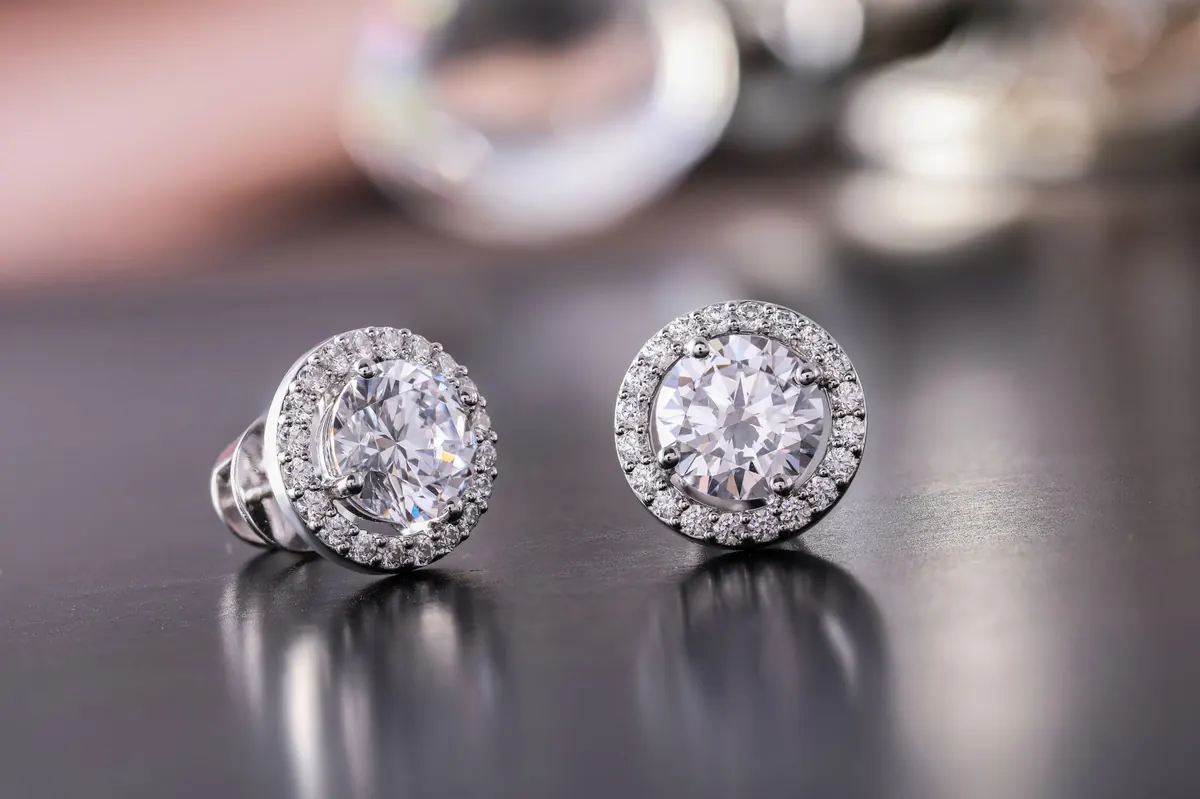
Opal and tourmaline share October, but opal is the one people picture — and earrings are where it works hardest. Held close to the face, it catches light with every turn of the head, and it is the easiest place to start if you have never bought opal before. A pair of studs or a short drop costs far less than a ring, gets worn more often, and teaches you what you actually like: milky white, inky black, or a stone that throws green and pink across the room.
Why Opal Earns Its Place in Earrings
Opal is one of the softer gemstones, sitting around 5.5 to 6.5 on the Mohs scale. That makes rings a gamble and earrings a sensible choice. Earrings simply meet fewer doorframes and work surfaces than a hand does.
There is a second reason. Opal is silica holding a small percentage of water inside its structure, which is what creates that shifting play of colour. That water also means it dislikes sudden change: steam, prolonged soaking, harsh chemicals and very dry storage can all dull or crack a stone over time. On an earlobe, away from washing-up water, hand cream and car keys, an opal has an easier life.
The Types of Opal You'll See Most Often
Shop labels can be confusing, so it helps to know the handful of categories that cover most earrings:
- White opal — a milky or pale body with flashes of colour across it. The classic look, widely available and usually the most affordable.
- Black opal — a dark body that makes the flashes look electric. Mostly Australian, and priced accordingly.
- Crystal opal — a transparent body, so the colour seems suspended inside the stone.
- Boulder opal — a thin layer of opal naturally bonded to ironstone. Earthy, often cut into irregular shapes.
- Fire opal — transparent orange, red or yellow, usually faceted rather than smooth. A different look entirely.
- Ethiopian opal — often bright and reasonably priced. Many are hydrophane, meaning they can absorb water, go temporarily clear, then recover as they dry.
If a seller mentions a doublet or triplet, that means a thin slice of opal has been glued to a backing to give it bulk. These can be perfectly good earrings, but they should be described as such and priced well below solid opal.
Studs or Drops? Choosing a Shape
Studs are the safe, everyday answer. They sit flat, work under headphones and helmets, suit short and long hair alike, and never tangle in a scarf. If the wearer is practical — a nurse, a cyclist, someone who takes earrings out at the gym — buy studs.
Drops earn their keep in the evening. A small opal at the lobe with a larger one swinging below draws the eye along the neck and looks considered with a plain silk shirt. Keep the drop short, under about 25mm, for regular wear; longer styles catch on collars and jumpers.
No piercings, no problem: clip-on and magnetic versions exist, though the choice of settings is narrower. For sensitive ears, look for titanium or 18ct gold posts rather than plated base metal.
Getting the Size Right
Opal studs are usually sold by diameter in millimetres, and that number matters more than carat weight when judging how a pair will look on an earlobe.
- 3–4mm — barely there. Ideal for a second or third piercing, or someone who dislikes noticeable jewellery.
- 5–6mm — the everyday classic. Visible from a metre away without shouting.
- 7–8mm — a deliberate statement, good on larger earlobes or a single main piercing.
- 10mm and up — bold, and best kept for occasions.
Two fit details are worth checking. Most posts are around 0.8mm thick, which suits a standard piercing; if the wearer finds thin posts fiddly, look for 1mm. And on a thin earlobe, a shorter post with a screw-back holds better than a long post with a butterfly that slides forward all day.
Metals, Settings and Everyday Care
Setting choice protects the stone. A bezel — a thin rim of metal wrapped around the edge — guards an opal's fragile girdle and is the better option for anyone who wears earrings constantly. A claw setting shows more of the stone and lets light reach it from the sides, which suits crystal and black opal, but leaves the edges exposed.
Metal changes how the colour reads. Yellow gold warms up fire opal and gives white opal a richer backdrop. White gold, platinum and silver keep things cool and let the play of colour do the talking. Rose gold flatters stones with pink and orange flashes.
Keeping Opal Looking Its Best
Wipe earrings with a soft, dry cloth — or one barely dampened — then dry them straight away. Apply perfume, hairspray and moisturiser before the earrings, not after. Skip ultrasonic and steam cleaners, avoid soaking, and take them off before a shower, swim or bath. Store them in a soft pouch or a lined compartment on their own, because opal scratches easily and harder stones will mark it.
Styling Opal for Day and Evening
Small white opal studs behave like a pearl with more personality: they work with knitwear, denim and a plain white shirt. Crystal opal studs look almost glassy in daylight and pick up cool blues and greens from a scarf or top.
For evenings, black opal drops against dark hair or a dark dress make the flashes look brighter than they ever do in a display case. If the wearer has several piercings, keep one opal as the focal point and let the rest be plain metal. Two competing opals on the same ear tends to look busy rather than considered. Skin tone matters less than people expect, since opal reflects whatever surrounds it — the exception is fire opal, which reads warm and looks best with gold and warm-toned clothing.
Your October Birthday Buying Checklist
- Decide how often they will be worn. Daily wear points to studs in a bezel setting.
- Choose the opal type: white for classic, black for drama, crystal for clarity, boulder for something unusual.
- Match the size to the piercing — around 4mm for a second hole, 6mm for a main lobe.
- Check the metal and post thickness, especially for sensitive ears.
- Ask whether the opal is solid or a doublet, and what the returns policy is.
- Buy the pouch. Opal needs its own soft storage, and it is rarely included with cheaper pairs.
Finally, buy the pair the wearer will actually put on. October birthday earrings are not usually an heirloom; they are something worn on a
Photo: The Glorious Studio / Pexels