
How to Choose an Opal Necklace for Everyday Wear
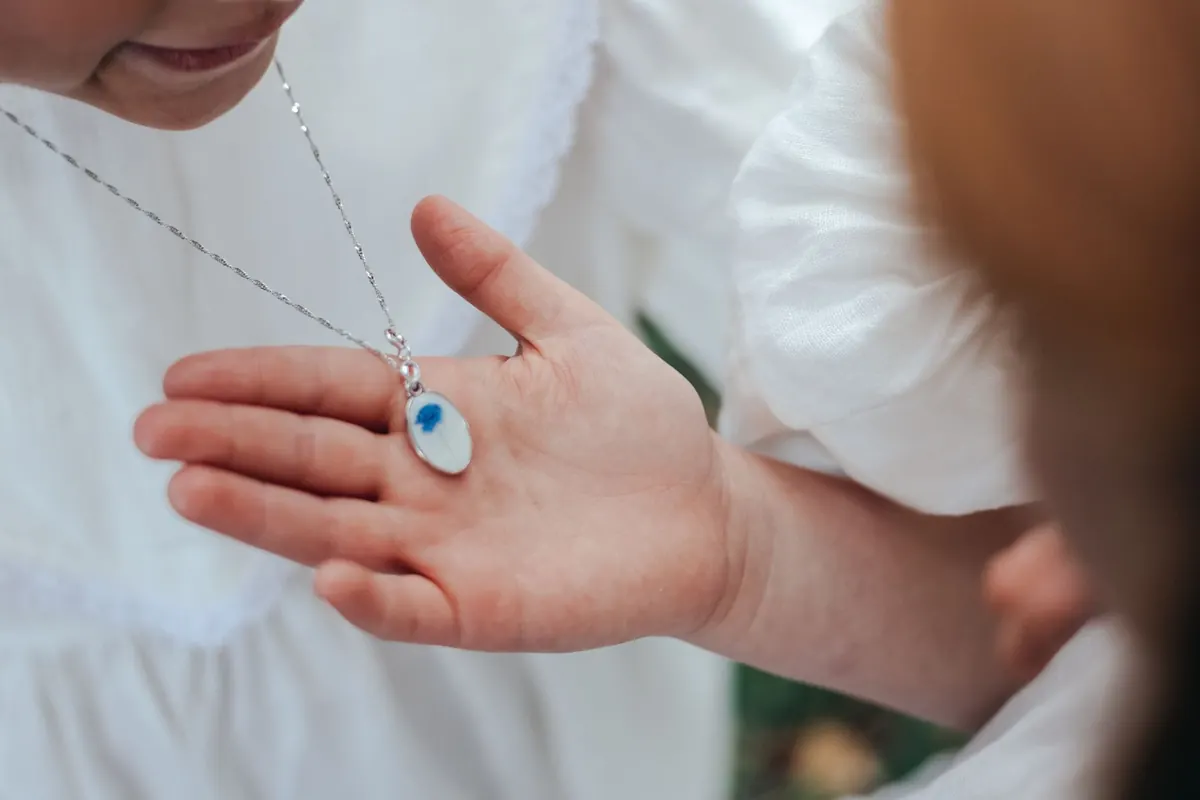
An opal necklace that only comes out for weddings is a small tragedy. Opal is a stone made to be caught in ordinary light — the green flash as you reach for a coffee, the pink you notice in a shop window on the way home. Wearing it every day is entirely possible, but it asks for a bit more thought than a plain gold pendant does. The stone, the setting and the chain all have a job to do, and getting those three right is the difference between a necklace you live in and one you keep in a box.
Which opal survives daily wear
Opal is softer than sapphire or diamond, and it holds water within its structure. That does not make it fragile, but it does mean the type of opal matters more than it would with a harder stone.
Solid opals are a single piece of natural opal, cut and polished. A solid white, crystal or black opal in a protective setting copes well with regular wear. Boulder opal is arguably the toughest everyday choice: the opal sits in its natural ironstone backing, which adds strength and gives every stone a deep, painterly pattern. Doublets and triplets are assembled stones — a thin slice of opal glued to a backing, sometimes with a clear quartz cap. They look lovely and cost less, but the joins dislike water, heat and knocks, so treat them as occasional pieces.
If you are drawn to Ethiopian opal, ask whether it is hydrophane. Many Welo opals absorb water and can look cloudy or paler for a while as they dry, then return to normal. It is not damage, but it is worth knowing before you wear one in the shower and wonder what happened.
Choosing a chain that will not let you down
Most everyday opal necklaces are pendants, which means the chain does the hard work. Two things matter: metal and construction.
Sterling silver, 9ct gold and 18ct gold all wear well. Gold vermeil and plated chains look identical on day one, but plating wears through at the clasp and wherever the pendant slides — often within a year or two of daily use. If you want gold on a budget, a slimmer 9ct chain is a better long-term buy than a chunky plated one.
Chain style is where necklaces quietly fail. Fine rope and Singapore chains kink. Snake chains dent and never straighten. Very thin trace chains can snap at the jump ring. For something you will wear constantly, look for:
- Box or curb chain in a mid weight — strong, smooth and resistant to kinking.
- A belcher or trace chain of roughly 0.8mm or more if you prefer a lighter look.
- Soldered jump rings instead of open ones, and a lobster or bolt clasp rather than a spring ring.
- A smooth bail that slides freely. If it sticks, it will rub the same spot on the chain every single day.
On lengths: 40cm sits at the collarbone, 45cm just below it, and 50–55cm drops towards the top of the chest. A 45cm chain with a small pendant is the most useful starting point — it clears most necklines and layers easily.
Settings and bails: where necklaces fail
How the opal is held matters as much as the stone itself. Opal edges chip more easily than the face, so a bezel setting, where a rim of metal wraps the stone, gives the best protection for daily wear. A half-bezel or a well-made claw setting with rounded, low-profile prongs is a good compromise: more light reaches the opal, and less catches on knitwear.
Check for movement. A stone that rattles is sitting too loose; one pressed in with no clearance at all can be under strain. A good setting holds the opal securely without gripping it. If you are buying online, ask for a close-up of the setting from the side and the back before you commit.
Open-backed settings let light travel through the stone, which flatters paler opals. Closed backs can trap moisture and cleaning fluid against the opal, so if you choose one, be careful about soaking the piece.
Layering without the morning tangle
Opal layers beautifully, but it prefers gentle neighbours. Keep at least 5cm between pendant lengths so the stones do not knock together, and pair a fine opal chain with one heavier chain rather than several of similar weight — similar weights tangle, different weights behave.
Avoid resting an opal against coarse textures such as a heavy curb or beaded chain. That kind of constant rubbing dulls a polished surface over months, not years. A chain separator or a second clasp helps if you like three or more strands, and it also lets you take the opal off without dismantling everything else.
Daily habits that add years
Most opal damage is not dramatic. It is slow, and it comes from chemicals and carelessness rather than from wearing the necklace.
- Put your necklace on last and take it off first, after perfume, hairspray, sunscreen and moisturiser have settled.
- Remove it for showers, swimming, washing up and the gym. Chlorine, hot water and detergents are unkind, and that is also when pieces go missing.
- Clean a solid opal with lukewarm water, a drop of mild soap and a soft brush, then pat dry with a lint-free cloth.
- Never use an ultrasonic or steam cleaner on opal, and never soak a doublet or triplet.
- Store it in a soft pouch or a lined box, away from harder stones that could scratch it.
- Check the bail and jump rings every few months, and have any wear repaired before it becomes a lost pendant.
A simple buying checklist
- Choose a solid or boulder opal for everyday wear; save doublets and triplets for occasional use.
- Pick a bezel or half-bezel setting unless you are confident handling claws.
- Buy a chain of 0.8mm or more in sterling silver, 9ct or 18ct gold.
- Look for soldered jump rings and a secure lobster or bolt clasp.
- Try the length against the necklines you actually wear.
- Ask whether the opal has been treated or stabilised — treated stones can be perfectly wearable, but they generally need gentler handling.
Start with one necklace you trust
If you take one thing from all of this, let it be the value of a single well-chosen piece. One solid opal, one mid-weight chain, one protective setting, one length that works with your wardrobe — that necklace will be worn far more often than three delicate pendants you are nervous about. Build that first, wear it for a month, and you will know exactly what you want from the second one.
Photo: Ron Lach / Pexels